Every grassroots club runs into the same problem eventually: subs are agreed at the start of the season, and then someone — usually the treasurer, sometimes the manager — spends the next nine months chasing them. A message here, a cash envelope there, an awkward conversation at training when a kid's dad hasn't paid in six weeks.
It's not that parents don't want to pay. It's that "pay whenever you remember" isn't a system — it's a hope.
Why manual collection breaks down
Cash and bank transfers rely on someone remembering to send money, and someone else remembering to check if it arrived. Multiply that by 20 players, and you've got a spreadsheet nobody enjoys updating and a treasurer who dreads committee meetings.
What actually works: Direct Debit, set up once
Direct Debit flips the responsibility. A parent sets it up once at registration — monthly or in full, whichever the club offers — and after that, it just happens. No reminders needed for the parents who pay on time, which is most of them.
The part that actually saves time: knowing who hasn't
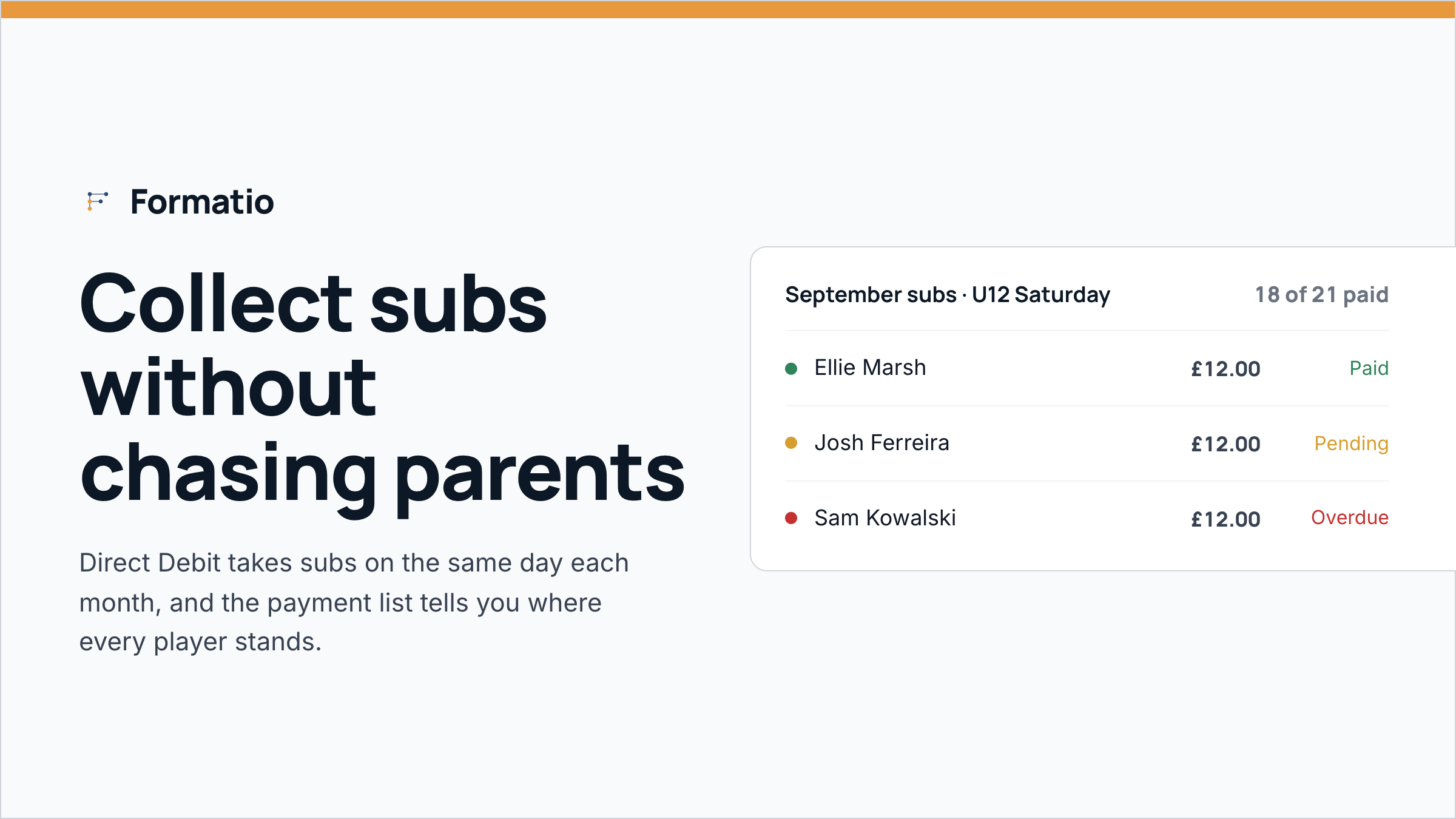
The real time sink isn't collecting money from people who pay — it's identifying who hasn't, and following up without it being awkward. A simple dashboard showing paid/pending/overdue at a glance turns "I think a few people might be behind" into "these three specific people are behind, here's a one-tap reminder."
What to do this season
If your club is still doing this manually, the fix doesn't need to be complicated: move fee collection to Direct Debit at the point of registration, and give whoever handles the books a clear view of who's paid. That's most of the problem solved before a ball's kicked.
Formatio handles registration and Direct Debit collection in one place, with a live payment status dashboard built for treasurers. One team is free forever — see how it works at formatio.club.