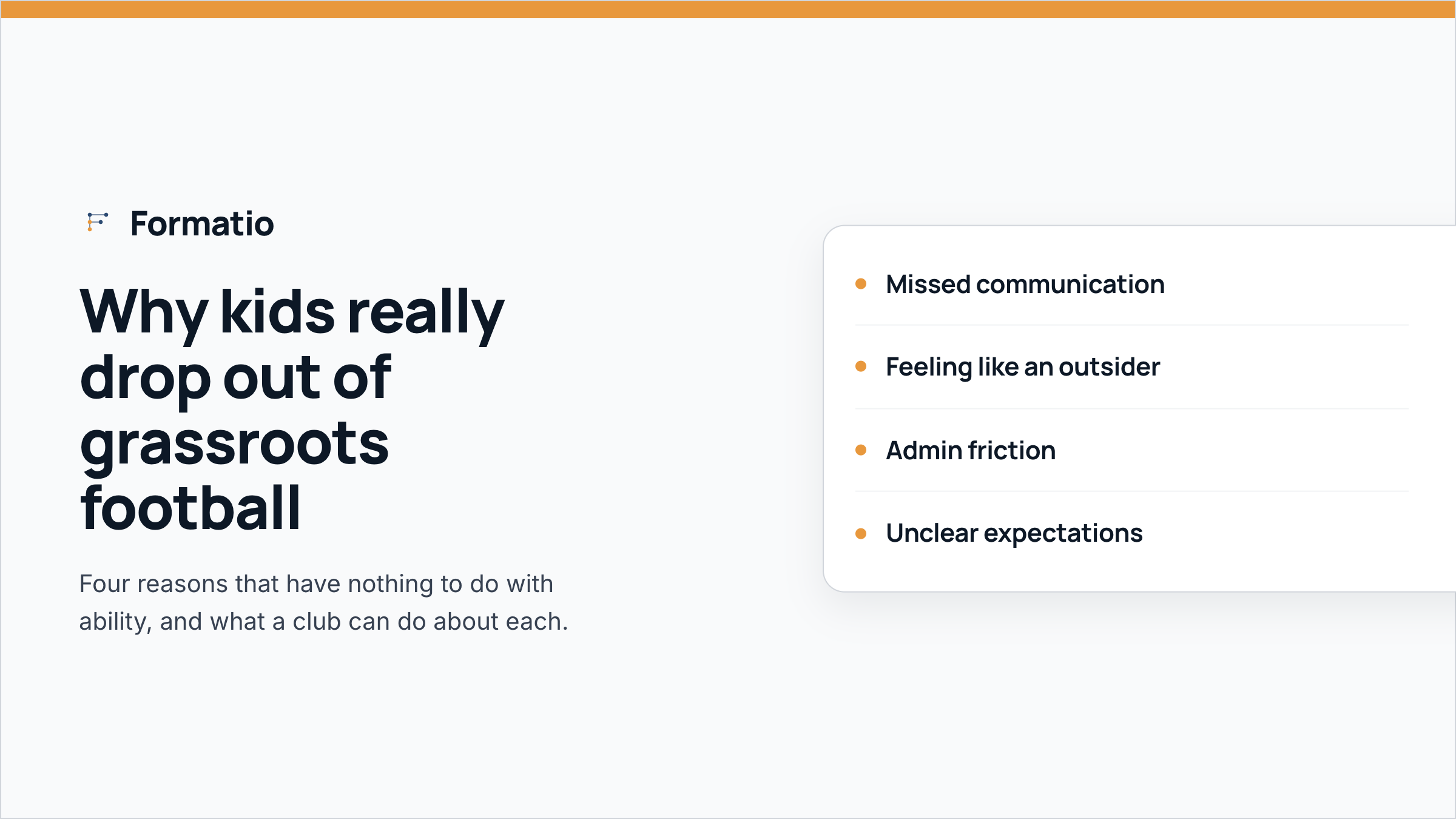
Every club loses a few players each season — some to genuinely changed interests, growing out of it, moving away. But a meaningful chunk of dropout isn't about the football at all. It's about friction around the football.
The reasons that aren't really about football
- Communication gaps — a parent who consistently finds out about sessions late, or misses a change nobody told them about, quietly starts deprioritising the whole activity
- Feeling like an outsider — a new family who never quite gets looped into the group chat, or misses the informal information everyone else seems to already know
- Admin friction — a registration or payment process that feels like a hassle each season is a small but real barrier, especially for a family already juggling multiple kids' activities
- Inconsistent playing time or unclear expectations — less about ability, more about a child (or parent) not understanding where they stand
What clubs can genuinely control
Most of the football itself — coaching quality, results, ability levels — isn't something every volunteer coach can fully control season to season. But the experience around the football largely is:
Consistent, timely communication that reaches every family, not just the ones already in the loop A registration process simple enough that re-joining isn't a chore Clear visibility for parents into what's happening and when, without needing to be plugged into an informal network to find out
Retention is a season-long thing, not a September problem
The families most likely to quietly drift away aren't usually announcing it — they just stop showing up as consistently, then stop entirely. Noticing that pattern early, and making sure communication reaches everyone equally, catches more of it than any single big gesture at the start of the season.
Formatio makes sure every parent gets the same information at the same time — event changes, RSVPs, team chat — so nobody quietly falls out of the loop because they missed one WhatsApp message. See how it works at formatio.club.